The first-period bell rings. Instead of a teacher greeting students at the door with a smile, a five-foot-tall machine rolls into the classroom. Its LED eyes glow as it scans the room and begins the lesson with a mechanical voice.
For now, that scene still belongs mostly in science fiction. But as technology advances, some educators are beginning to ask whether robots could someday assist teachers in the classroom.
The conversation gained momentum when Tesla introduced its humanoid robot prototype, Optimus, during a technology presentation in 2021 led by Elon Musk. The robot was designed to perform everyday tasks, but the demonstration sparked a broader debate about where machines might eventually be used, including in schools.
According to a 2025 survey by the Walton Family Foundation, 40% of teachers favor AI in schools and 28% oppose it. Most of the people that approve of AI in school are AI users themselves. But will these percentages convince local schools here in California to add AI powered robots?
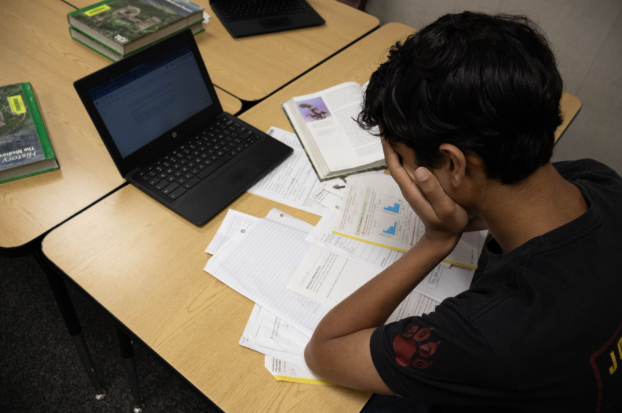
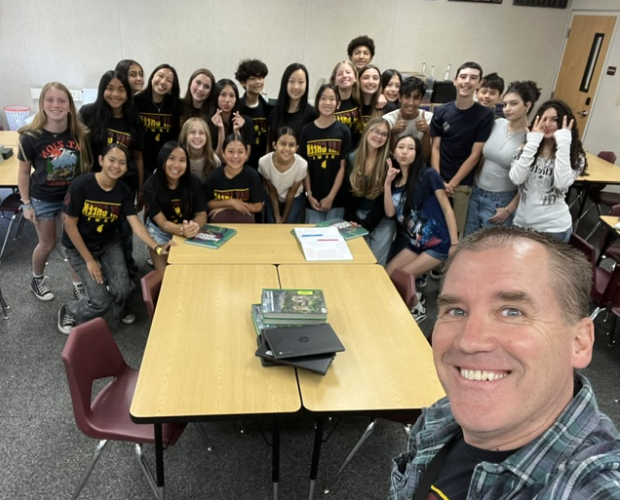
At Day Creek, students and teachers have mixed opinions about what that future might look like.
For some students, the idea of a robot in the classroom sounds exciting.
Supporters say robots could help with routine tasks like taking attendance, answering simple questions, or organizing assignments. That might give teachers more time to focus on helping students individually.
Eighth-grade teacher Mrs. Daley says technology could eventually make classrooms more efficient.
“Life with a robot sounds fantastic,” Daley said. “Maybe in the future you could have a robot that scans the classroom and makes sure everyone is where they should be. Actually, I would probably be able to do more one-on-one with my multi-language learners. It’s really helpful for me to be next to them and go, ‘Okay, you got that one right. All right, what does this sound like?’ And we’re practicing Greek and Latin. So I think it would be amazing because I have more face to face with my students.”
Some students also believe robots might help them stay focused during class.
“I think I’d like school better because they’d help me pay attention,” said seventh grader Drayton L.
Experts think the debate may not be about robots replacing teachers at all. Instead, they may serve as tools that support educators.
According to the BBC, Osaka University’s roboticist, Hiroshi Ishiguro, is predicting that with robots already seen in Japan’s hotel rooms and restaurants, children will learn to grow up with robots, like they did with phones. Robots have started to roll into about 500 classrooms across Japan to teach English and it is pictured that robots will start coming to class rooms world wide.

Others believe robots could never replace the most important part of school: human connection.
Many educators argue that teaching requires empathy, humor, and the ability to build relationships with students. Those qualities may be difficult for machines to replicate.
Seventh-grade teacher Ms. Keltner believes a robot would struggle to connect with students.
“A robot would probably be yelling at my kids and not telling my jokes or making lessons fun,” Keltner said. “Teaching is about relationships. You have to be able to relate to students, and robots wouldn’t be able to do that.”
Students share similar concerns.
“I would like school less because in school you need life,” said seventh grader Grace A. “Robots wouldn’t have the connection students need. [Humans have] kindness, gratitude, and the encouragement that robots don’t have.”
“Education [and] teaching kids requires emotion and passion. And that is how we truly get students engaged. Emotion is not something that I have ever seen scientists being able to program. Plus it would never feel authentic to kids.” said vice principal Mr. Lewis. “I think they can be helpful tools. It can enhance education. It can help make it more fun, it can help you organize, but it’s always just a tool.”
While robots replacing teachers may still be far away, technology is already becoming a larger part of classrooms through artificial intelligence, online learning platforms, and digital tools.
Many educators believe the future of education will involve a balance between human teachers and new technology.
In the meantime, Day Creek students will still be met by human teachers every morning, not a robot with glowing eyes. But as technology continues to evolve, the idea of robotic helpers coming to classrooms may be closer than it once seemed.
Whether students see robots as helpful assistants or unwanted replacements, one thing is clear: the conversation about technology in education is only just beginning.